Email: info@touchsh.com
User

Upgraded Android Industrial Panel PC Technology, POE Power Supply Simplifies On-site Wiring & Deployment
2026-09-28 15:32:58
175
Upgraded Android Industrial Panel PC Technology, POE Power Supply Simplifies On-site Wiring & Deployment
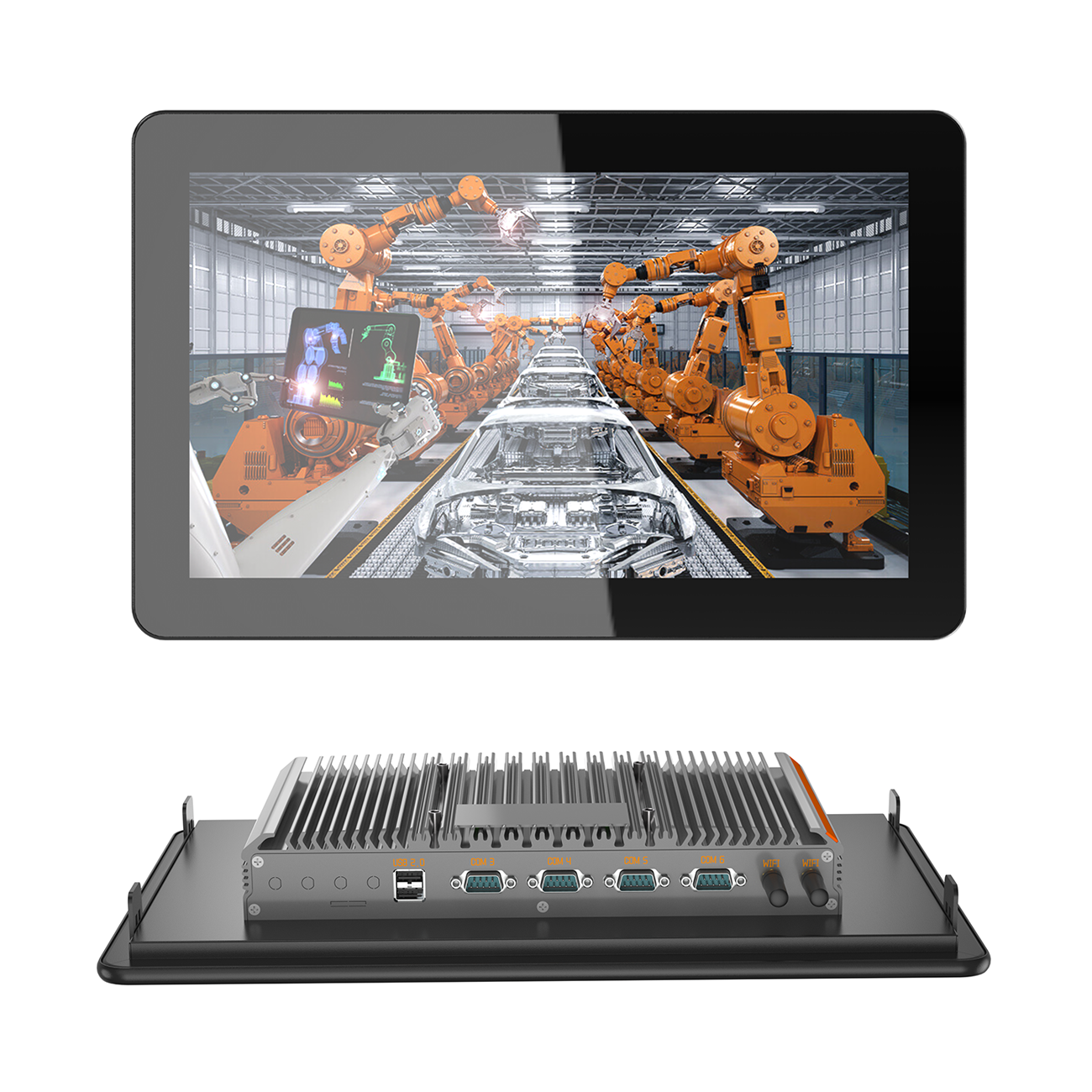
[Shanghai, China — September 28, 2026] — Industrial panel PCs have come a long way from the clunky, slow, Windows-only devices of a decade ago. The latest generation of Android industrial panel PCs brings significant technology upgrades — more powerful processors, enhanced touch, rugged construction, and a feature that is transforming how these devices are installed on the factory floor: Power over Ethernet (POE).
POE delivers both power and data over a single Ethernet cable — eliminating separate power cables, power outlets, and power adapters. The result: simpler wiring, faster deployment, lower cost, and more flexible placement.
This article examines the technology upgrades in the latest Android industrial panel PCs and how POE is simplifying on-site wiring and deployment.
The Android Advantage in Industrial Computing
Before diving into the technology upgrades, it's worth recalling why Android has become such a popular platform for industrial panel PCs:
- Fast boot: Android boots in 5–10 seconds (vs. 30–60 seconds for Windows) — critical for production environments where downtime is costly
- Low power consumption: ARM processors running Android use 5–15W — enabling fanless cooling and reducing energy costs
- Rich app ecosystem: Millions of Android apps, plus industrial-specific HMI and SCADA applications
- Customizable: Open-source platform allows deep customization — kiosk mode, custom launchers, branded UI, locked-down operation
- Cost-effective: Android/ARM solutions typically cost 30–50% less than equivalent Windows/x86 solutions
- Touch-optimized: Android is designed for touch interaction — natural for industrial HMI applications
- Long-term support: Android 11 and later versions offer extended support for industrial deployments
For dedicated HMI, data acquisition, MES terminals, and edge display applications, Android is often the optimal choice — and the latest generation brings meaningful technology upgrades.
Technology Upgrade 1: More Powerful ARM Processors
The latest Android industrial panel PCs feature upgraded ARM processors that deliver significantly more performance than previous generations:
- Quad-core and octa-core configurations — from entry-level quad-core (1.5GHz) to high-performance octa-core (2.0–2.5GHz)
- Improved CPU architecture — newer ARM Cortex-A cores deliver better per-core performance and energy efficiency
- Enhanced GPU — integrated graphics processors handle smooth UI rendering, charts, and basic visualization
- Larger memory support — 4GB RAM standard (8GB optional) for smooth multi-tasking
- Faster storage — 64GB eMMC standard (128GB/SSD optional) with faster read/write speeds
What this means for users:
- Faster boot and application launch
- Smoother HMI operation with complex screens and charts
- Ability to run edge processing and local analytics
- Better multi-tasking (HMI + data logging + communication)
- Future-proofing for more demanding applications
Technology Upgrade 2: Enhanced Capacitive Multi-Touch
Touch is the primary interaction method for industrial panel PCs, and the latest generation brings meaningful improvements:
- PCAP (Projected Capacitive) 10-point multi-touch — standard across all sizes
- Enhanced touch controllers — improved signal processing for better accuracy and responsiveness
- Gloved operation support — enhanced controllers support thin-to-medium work gloves (nitrile, latex, light fabric)
- Wet-finger and water-rejection — advanced algorithms distinguish between intentional touch and water droplets on the screen
- Higher touch sampling rate — faster response for smooth dragging and gesture operations
- Improved noise immunity — better performance in electrically noisy industrial environments
What this means for users:
- Operators can interact with the screen while wearing work gloves
- Wet or sweaty hands don't cause false touches
- Faster, more accurate touch response
- Reliable operation in noisy industrial environments
Technology Upgrade 3: Rugged Construction Upgrades
Industrial panel PCs operate in harsh environments, and the latest generation brings improved ruggedness:
- Fanless passive cooling — standard across all models, eliminating the #1 failure point
- IP65 front panel — dust-tight, water-jet resistant (IP67 fully-sealed option available)
- Wide-temperature operation — -10°C to 60°C standard, extended -20°C to 70°C, extreme -30°C to 80°C with LCD heating
- Full-lamination optical bonding — eliminates air gap for better clarity, no condensation, improved durability
- Vibration and shock resistance — MIL-STD-810G equivalent, with underfilled BGA and secured connectors
- Solid-state storage — eMMC/SSD, no moving parts
- Aluminum or stainless steel enclosure — durable, corrosion-resistant, thermally conductive
What this means for users:
- Zero maintenance (no fans, no filters)
- Reliable operation in dust, water, heat, cold, and vibration
- 100,000+ hour MTBF
- 7–10 year service life
Technology Upgrade 4: Rich Industrial I/O
The latest Android industrial panel PCs offer comprehensive industrial I/O for connecting to diverse equipment:
- Serial ports: RS232/RS485 (configurable, 1–4 ports) for PLC, sensor, and instrument connectivity
- Ethernet: Gigabit Ethernet (single or dual) for network connectivity
- USB: USB 2.0/3.0 (2–6 ports) for peripherals
- GPIO: 4-in/4-out configurable for sensors, relays, alarms
- HDMI: Output for secondary display
- Wireless: Dual-band Wi-Fi, Bluetooth 4.2
- Optional: 4G LTE, GPS, LoRa for remote/wireless connectivity
What this means for users:
- Connect to virtually any industrial equipment
- No need for external converters or adapters
- Flexible integration into existing systems
The Game-Changer: POE Power Supply
Among all the technology upgrades, Power over Ethernet (POE) stands out as the feature that most simplifies on-site wiring and deployment.
What Is POE?
POE (Power over Ethernet) is a technology that delivers both electrical power and data over a single standard Ethernet cable (Cat5e/Cat6). Instead of requiring a separate power cable and power outlet, a POE-enabled device receives power from the Ethernet cable itself — supplied by a POE switch or POE injector.
How it works:
- A POE switch (or POE injector) sends both data and low-voltage power over the Ethernet cable
- The POE-enabled industrial panel PC receives both power and data through the same cable
- No separate power cable, power adapter, or power outlet is needed
POE standards:
- IEEE 802.3af (POE): Up to 15.4W per port — sufficient for most 7"–15" industrial panel PCs
- IEEE 802.3at (POE+): Up to 30W per port — for larger 17"–27" displays and higher-performance models
- IEEE 802.3bt (POE++): Up to 60–100W per port — for very high-performance or large displays
How POE Simplifies On-site Wiring & Deployment
POE transforms the installation of industrial panel PCs in several significant ways:
1. Simplified Wiring — One Cable Instead of Two
Without POE: Each industrial panel PC requires two cables — one Ethernet cable for data and one power cable for electricity. This means double the cable routing, double the cable management, and double the potential failure points.
With POE: Each device requires only one Ethernet cable — carrying both power and data. This simplifies cable routing, reduces cable clutter, and makes cable management cleaner and more organized.
2. Reduced Installation Time
Without POE: Installation requires:
- Running Ethernet cable to the device location
- Running power cable to the device location (often requiring an electrician)
- Installing a power outlet near the device
- Connecting and securing both cables
- Testing both data and power connections
With POE: Installation requires:
- Running one Ethernet cable to the device location
- Connecting the cable to the device
- Testing the connection (power and data come through the same cable)
Result: Installation time can be reduced by 40–60%, and in many cases, no electrician is needed — IT or maintenance staff can handle the installation.
3. Lower Deployment Cost
POE reduces costs in multiple ways:
- Fewer cables: One cable instead of two — lower material cost
- No power outlets: No need to install additional electrical outlets (which can cost $100–$500 each, especially in industrial environments)
- No power adapters: POE eliminates the need for external power adapters/brick supplies
- Less labor: Faster installation means lower labor cost
- No electrician needed: In many jurisdictions, running data cables doesn't require a licensed electrician — but running power cables does
Result: POE can reduce total deployment cost by 20–40% per device, especially in installations where power outlets are not readily available.
4. Flexible Placement
Without POE: Industrial panel PCs must be installed near a power outlet — which may not be where you actually need the display. This often compromises placement, requiring extension cords or additional electrical work.
With POE: Devices can be installed anywhere an Ethernet cable can reach — on machines, on production lines, on walls, on poles, in remote corners of the factory. No power outlet needed. This gives system integrators and factory planners much more flexibility in device placement.
5. Centralized Power Management & UPS Backup
Without POE: Each device has its own power supply, plugged into various outlets around the facility. Providing UPS (Uninterruptible Power Supply) backup requires individual UPS units or complex power distribution.
With POE: All POE devices are powered through the central POE switch — which can be connected to a single UPS for backup power. This means:
- One UPS protects all POE devices
- Centralized power monitoring and management
- Graceful shutdown capability during power outages
- Simplified power infrastructure
Result: POE makes UPS backup simple and cost-effective — critical for industrial environments where power fluctuations and outages are common.
6. Safer Installation
POE delivers low-voltage power (48V DC) over data cables — which is generally considered safer than 110/220V AC power cables. In many regions, low-voltage data cabling doesn't require the same strict electrical codes and licensed electrician requirements as high-voltage power cabling. This makes installation safer and more accessible.
Application Scenarios Where POE Delivers the Most Value
POE is particularly valuable in the following industrial scenarios:
1. Multi-Terminal MES Deployments
When deploying 10, 20, or 50+ MES terminals across a factory, POE dramatically simplifies wiring and reduces installation time and cost. Each terminal needs only one Ethernet cable — no power outlets, no electricians, no adapters.
2. Production Line Andon Systems
Andon systems require displays at multiple points along a production line. POE allows these displays to be installed exactly where needed — on the line, on pillars, on overhead structures — without worrying about power availability.
3. Smart Factory Retrofits
When retrofitting an existing factory with new industrial panel PCs, power outlets may not be available at the desired installation points. POE eliminates the need for costly electrical work — just run an Ethernet cable.
4. Distributed Monitoring Stations
For monitoring stations distributed across a large facility (warehouses, logistics centers, outdoor yards), POE allows displays to be installed in remote locations where power is not readily available — as long as network cabling reaches.
5. Installations Where Power Outlets Are Scarce
In older factories, outdoor areas, temporary installations, or leased facilities, power outlets may be limited or unavailable. POE solves this problem by delivering power over the network cable.
6. Clean Rooms & Controlled Environments
In clean rooms, pharmaceutical facilities, and food processing areas, minimizing cables and openings is important for contamination control. POE's single-cable solution reduces cable clutter and simplifies installation in these controlled environments.
POE Considerations & Best Practices
While POE offers significant benefits, there are some considerations:
- POE switch capacity: Ensure your POE switch has enough total power budget to support all connected POE devices. A 24-port POE switch may have a 370W total budget — enough for ~24 devices at 15.4W (POE) or ~12 devices at 30W (POE+).
- Cable quality: Use Cat5e or Cat6 Ethernet cables for POE. Lower-quality or longer cables (>100m) may experience voltage drop.
- POE standard matching: Ensure the device's POE standard (af/at/bt) matches the switch's POE standard. Most POE switches are backward-compatible, but verify power requirements for larger displays.
- Distance limitation: POE has a standard maximum distance of 100 meters (328 feet) over Ethernet cable. For longer distances, use POE extenders or fiber with POE converters.
- UPS backup: Connect the POE switch to a UPS for uninterrupted power during outages — this protects all connected POE devices with a single UPS.
How Senke Delivers Upgraded Android Industrial Panel PCs with POE
Senke's latest Android industrial panel PC lineup combines all the technology upgrades discussed — with POE support as a key feature:
Upgraded Android Platform:
- Android 11 operating system (standard)
- Quad-core/octa-core ARM processors (1.5–2.5GHz)
- 4GB RAM (8GB optional), 64GB eMMC (128GB/SSD optional)
- Fast boot (5–10 seconds), low power consumption (5–15W)
- Kiosk mode, custom launcher, OTA update support
Enhanced Touch & Display:
- PCAP 10-point capacitive multi-touch with gloved/wet-finger support
- Full-lamination optical bonding (available)
- High-brightness 1000–1500 nits option (outdoor)
- 7" to 27" full size range
Rugged Construction:
- Fanless passive cooling (all models)
- IP65 front panel (IP67 fully-sealed option)
- Wide-temperature operation (-10°C to 60°C standard, ext. -30°C to 80°C)
- Vibration/shock resistance (MIL-STD-810G equivalent)
- 100,000+ hour MTBF
- 7–10 year product lifecycle commitment
POE Power Supply:
- IEEE 802.3af/at POE support (select models)
- Single Ethernet cable for power + data
- Eliminates separate power cables, outlets, and adapters
- Simplifies on-site wiring and reduces deployment time/cost
- Centralized UPS backup through POE switch
Rich Industrial I/O:
- RS232/RS485 (configurable)
- Gigabit Ethernet (POE-enabled)
- USB 2.0/3.0
- GPIO (4-in/4-out)
- HDMI output
- Dual-band Wi-Fi, Bluetooth 4.2
- Optional 4G LTE, GPS
Conclusion
The latest generation of Android industrial panel PCs brings meaningful technology upgrades — more powerful processors, enhanced touch, rugged construction, and rich industrial I/O. But among all these upgrades, POE power supply stands out as the feature that most simplifies on-site wiring and deployment.
By delivering both power and data over a single Ethernet cable, POE eliminates separate power cables, power outlets, and power adapters — reducing wiring complexity, cutting installation time by 40–60%, lowering deployment cost by 20–40%, enabling flexible device placement, and simplifying UPS backup through centralized power management.
For industrial automation customers deploying multiple terminals across factories, production lines, and distributed facilities, POE is not just a convenience — it's a significant cost-saving and deployment-simplifying technology that makes installations faster, cleaner, and more flexible.
Senke's upgraded Android industrial panel PC lineup — featuring POE support, fanless design, IP65/IP67 protection, wide-temperature operation, rich I/O, and a full 7"–27" size range — delivers the technology upgrades and POE simplicity that industrial automation customers need for fast, cost-effective on-site deployment.
About Senke Senke is a trusted global provider of industrial display solutions, touch computers, and HMI systems. The latest generation of Senke Android industrial panel PCs combines upgraded ARM processors, enhanced capacitive multi-touch, rugged fanless construction, rich industrial I/O, and POE (Power over Ethernet) support that simplifies on-site wiring and deployment. With a full lineup from 7" to 27", IP65/IP67 protection, wide-temperature operation, and 7–10 year product lifecycle commitment, Senke delivers reliable, easy-to-deploy industrial panel PCs for factory automation, MES, Andon, and smart manufacturing applications worldwide.
Contact Senke International Sales Department Email: sales@senke.com Website: www.senke.com
New News
Embedded Industrial PC for Simple Integration
45
2026-10-16
High Protection Industrial Touch Panel PC
54
2026-10-15
Hot Products
Full Screen Digital Advertising Poster
Ultra-thin 4k
10 Inch Windows Rugged Tablet
Android 11,MT8788,4G,64G

Senke Electronic is a manufacture of industrial panel pc, industrial box pc, rugged tablet, kiosk payment and digital display advertising.