Email: info@touchsh.com
User

Industrial Display Market Watch: High Brightness and Wide Temperature Range Become Standard for Outdoor Applications
2026-09-01 15:59:35
281
Industrial Display Market Watch: High Brightness and Wide Temperature Range Become Standard for Outdoor Applications
[Shanghai, China — September 1, 2026] — The global industrial display market is undergoing a significant structural shift. For years, industrial displays were primarily deployed in controlled indoor environments where standard 300–500 nit brightness and 0–50°C operating ranges were sufficient. Today, that paradigm is changing rapidly. Driven by the explosive growth of outdoor and harsh-environment applications, high brightness (700–1000+ nits) and wide temperature range (-30°C to 80°C) are transitioning from premium options to baseline requirements for industrial displays.
Market Drivers: Why Outdoor Is Booming
Several converging trends are driving the rapid growth of outdoor industrial display deployments:
Smart City and Urban Infrastructure — Cities are investing heavily in outdoor digital infrastructure: outdoor information kiosks and wayfinding displays, outdoor digital signage, smart street pole displays, and transit hub information screens. All require year-round outdoor operation in direct sunlight and across seasonal temperature extremes.
EV Charging and New Energy Infrastructure — The global transition to electric vehicles is creating massive demand for outdoor interactive displays. Every public EV charger requires a weatherproof, sunlight-readable touchscreen for user interaction, payment, and charging status. Battery swap stations, energy storage systems, and solar/wind farm monitoring also drive demand for rugged outdoor displays.
Port, Maritime, and Logistics — Port container terminals, shipboard displays, outdoor warehouse yard displays, and cold storage interfaces all require displays that survive salt spray, extreme temperatures, direct sunlight, and vibration.
Agricultural and Construction Machinery — Modern tractors, harvesters, excavators, and cranes use large touchscreen displays for precision farming, machine monitoring, camera feeds, and grade control — operating in direct sunlight and across seasonal temperature extremes.
Outdoor Self-Service and Retail — Outdoor fast-food ordering kiosks, ticketing and payment terminals, fuel station displays, and car wash terminals are moving self-service outdoors, requiring weatherproof, sunlight-readable displays.
High Brightness: From Premium to Standard
The most visible shift in outdoor industrial display requirements is the rapid standardization of high-brightness panels. Standard indoor displays (250–500 nits) become essentially unreadable in direct sunlight — when ambient light exceeds display output, the image appears washed out, contrast collapses, and text becomes illegible.
The threshold for reliable sunlight readability is generally 700 nits or higher, with 1000 nits becoming the preferred standard for full-sun outdoor applications. At these brightness levels, display output exceeds typical ambient sunlight, maintaining readable contrast and clear text.
Technology enabling high brightness includes:
- High-efficiency LED backlights delivering higher lumens per watt
- Local dimming and Mini-LED backlight architectures
- Full-lamination optical bonding reducing internal reflection by up to 20%
- Anti-glare (AG) surface treatment reducing specular reflection
- Automatic brightness control with ambient light sensors
Industry analysts report the high-brightness display segment (700+ nits) is growing at a CAGR of approximately 12–15%, significantly outpacing the overall industrial display market. By 2028, high-brightness displays are projected to account for more than 35% of total industrial display unit shipments.
Wide Temperature Range: Surviving the Extremes
The second major shift is the standardization of wide operating temperature ranges. Standard indoor displays (0–50°C or -10–60°C) are inadequate for outdoor applications that must survive extreme winter cold (-20°C to -40°C), extreme summer heat (50°C to 70°C surface temperature in direct sun), rapid temperature cycling, and reliable cold-start after extended sub-zero exposure.
The emerging standard for outdoor industrial displays is an operating range of -30°C to 80°C, with storage ranges extending to -40°C to 85°C.
Technology enabling wide-temperature operation includes:
- Wide-temperature LCD panels with specialized liquid crystal formulations
- Integrated screen and enclosure heating for reliable cold-start
- Optimized passive thermal design using heat pipes and thermally conductive enclosures
- Wide-temperature industrial components throughout
- Full-lamination eliminating air gaps where condensation forms
- UV-stabilized and corrosion-resistant materials
The cold storage application is particularly demanding — displays must operate at -20°C to -30°C continuously, where standard displays suffer severely degraded response time. Wide-temperature displays with integrated heating maintain normal response time and touch sensitivity even in deep-freeze conditions.
Other Outdoor Standard Features
Beyond high brightness and wide temperature, several features are rapidly becoming standard:
- IP65/IP67 environmental sealing — IP65 is now baseline, IP67 increasingly required for washdown
- Fanless, ventless construction — fans require ventilation openings that compromise sealing
- UV and weather resistance — UV-stabilized materials and anti-yellowing coatings
- Gloved and wet-finger touch — enhanced capacitive controllers with water rejection
- Anti-vandal and impact resistance — tempered glass and tamper-resistant enclosures
Application Sector Highlight: EV Charging
The global EV charging station market is projected to grow at a CAGR of 25–30% through 2030, with each charger requiring an outdoor interactive display. EV charging displays must operate in direct sunlight (700–1000+ nits), survive -30°C to 60°C+ temperatures, support gloved/wet-finger touch, resist rain/snow/dust/UV, and provide reliable 24/7 operation. This segment alone is expected to drive demand for millions of outdoor industrial displays over the next five years, making it the single largest growth driver for high-brightness, wide-temperature displays.
Implications for Manufacturers and Procurement
For display manufacturers: Standardizing on outdoor-capable platforms as baseline, investing in backlight and thermal technology, vertical integration of optical bonding and thermal design, and careful long-term component sourcing.
For system integrators and OEMs: Platform-based design using standardized high-brightness, wide-temperature modules, early supplier engagement for optimal thermal/mechanical integration, total cost of ownership focus (higher upfront cost but longer life and lower maintenance), and global climate considerations making -30°C to 80°C and 1000+ nits the safe default.
For procurement teams: Standardizing specifications across outdoor product lines, rigorous supplier qualification (extended temperature, UV, salt spray, reliability testing), and lifecycle/end-of-life planning for 7–10+ year service lives.
Senke's Outdoor Display Solutions
Senke offers a comprehensive lineup of high-brightness, wide-temperature industrial displays from 7" to 27":
- High brightness: 700–1000 nits standard, optional 1500 nits ultra-high-brightness; full-lamination optical bonding; anti-glare/anti-fingerprint coatings; automatic brightness control
- Wide temperature: Standard -10°C to 60°C, extended -20°C to 70°C option, extreme -30°C to 80°C option; integrated screen/enclosure heating; optimized passive thermal design; wide-temperature industrial components
- Environmental protection: IP65 front panel standard, IP67 fully-sealed option; fanless ventless construction; UV-stabilized materials; corrosion-resistant anodized aluminum (optional 316 stainless steel); anti-vandal tempered glass options
- Full size range: 7"–10" compact, 12"–15" standard, 17"–21.5" large, 27" extra-large
- Customization: Custom brightness, temperature ranges, I/O interfaces, enclosure materials/colors/branding, mounting solutions, OS images, and full OEM/ODM services
Conclusion
The industrial display market is undergoing a fundamental transformation as outdoor and harsh-environment applications drive demand for more rugged, higher-performance displays. High brightness (700–1000+ nits) and wide temperature range (-30°C to 80°C) are no longer optional upgrades — they are essential baseline requirements for outdoor industrial displays. Driven by EV charging, smart cities, port operations, agricultural mechanization, outdoor self-service, and cold storage, this shift is reshaping the entire industrial display ecosystem.
For any organization deploying displays outdoors, selecting displays that meet high-brightness and wide-temperature standards from the outset will deliver lower total cost of ownership, reduced downtime, longer service life, and superior user experience across all outdoor operating conditions. Senke, with its comprehensive high-brightness, wide-temperature, IP65/IP67 industrial display lineup and deep OEM/ODM customization, is well-positioned to help customers navigate this transition.
About Senke Senke is a trusted global provider of industrial display solutions, touch computers, and HMI systems. With a full product lineup from 7" to 27", including high-brightness sunlight-readable models, wide-temperature displays, IP65/IP67 sealed enclosures, fanless construction, and deep OEM/ODM customization, Senke serves customers in manufacturing, automotive, food & beverage, pharmaceutical, logistics, retail, healthcare, energy, transportation, agriculture, and smart cities worldwide.
Contact Senke International Sales Department Email: sales@senke.com Website: www.senke.com
New News
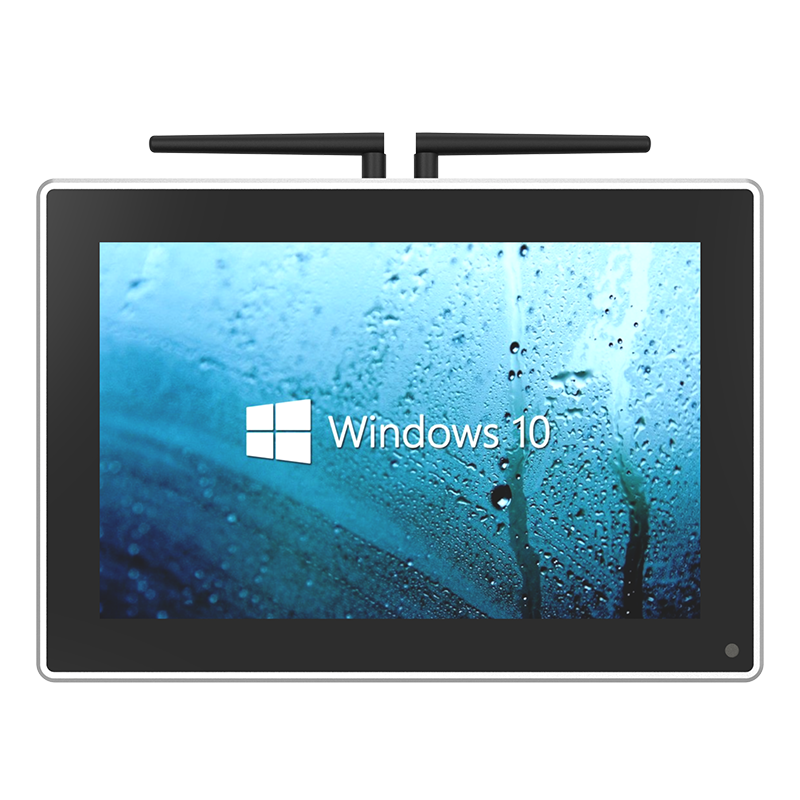
Multi COM Industrial All-in-One PC for PLC Connection
26
2026-10-23
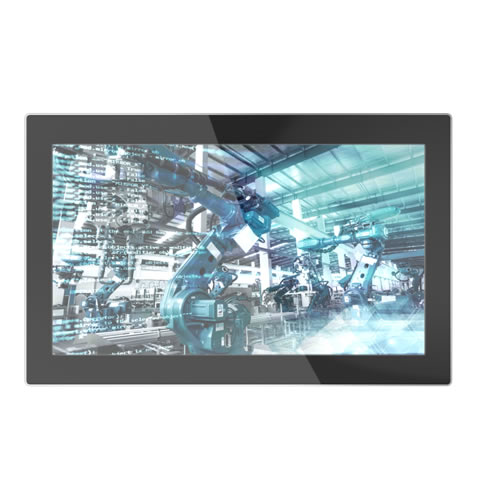
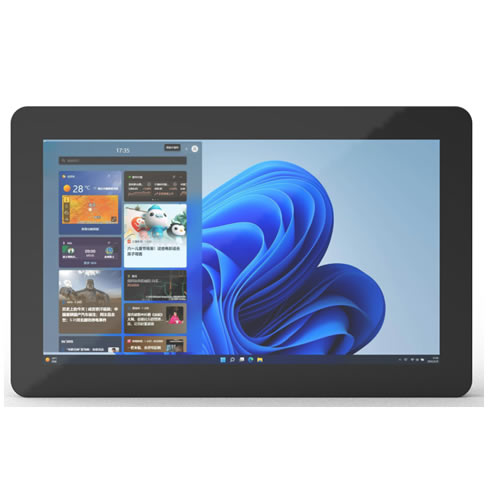
Multi-size Industrial All-in-One PCs Available in Stock
67
2026-10-20
Hot Products
Full Screen Digital Advertising Poster
Ultra-thin 4k
10 Inch Windows Rugged Tablet
Android 11,MT8788,4G,64G

Senke Electronic is a manufacture of industrial panel pc, industrial box pc, rugged tablet, kiosk payment and digital display advertising.