Email: info@touchsh.com
User

Industrial PC Cooling: Fanless vs. Fan-Cooled — Which Fits Your Application?
2026-08-26 16:06:22
323
Industrial PC Cooling: Fanless vs. Fan-Cooled — Which Fits Your Application?
[Shanghai, China — August 26, 2026] — Thermal design is critical to industrial PC reliability and lifespan. Two approaches dominate the market: fanless (passive) and fan-cooled (active). Each has distinct strengths — the right choice depends on your environment and requirements.
How They Work
Fan-cooled systems use a fan to force airflow over a heatsink, rapidly removing heat from the CPU. Vents allow cool air in and hot air out.
Fanless systems use heat pipes to conduct heat to a large metal chassis, dissipating it through natural convection — no moving parts, no vents.
Quick Comparison
| Dimension | Fan-Cooled | Fanless |
|---|---|---|
| Thermal Power | Strong — supports high-wattage CPUs | Moderate — best for low-mid power CPUs |
| Dust/Water Resistance | Weak — vents draw in contaminants | Excellent — fully sealed, IP65/IP67 |
| Noise | 30–50 dB | Zero noise |
| Reliability (MTBF) | 30K–50K hours (fan-limited) | 100K+ hours |
| Maintenance | Regular cleaning, fan/filter changes | Maintenance-free |
| Upfront Cost | Lower | Higher (20–40% premium) |
| Long-Term TCO | Higher (maintenance + downtime) | Lower |
| Installation | Needs ventilation space | Flexible — no vents required |
Key Trade-Offs
Fan-cooled advantages: Higher CPU performance for demanding tasks (machine vision, video analysis), lower upfront cost, ideal for clean, temperature-controlled, easily accessible environments.
Fanless advantages: Fully sealed against dust, water, and oil; silent operation; no moving parts means 100K+ hour MTBF and zero maintenance; flexible installation without ventilation gaps. Ideal for harsh environments, 24/7 mission-critical operation, noise-sensitive settings, and hard-to-reach locations.
When to Choose Which
Choose fan-cooled when: High-performance computing is required; deployment is in a clean, controlled room; budget is the primary constraint; equipment is easy to access for maintenance.
Choose fanless when: Environment is dusty, wet, oily, or corrosive; 24/7 operation with minimal downtime is critical; equipment is in remote or hard-to-reach locations; noise must be minimized; regular washdown is needed; long service life with low total cost is the goal.
Senke's Solution
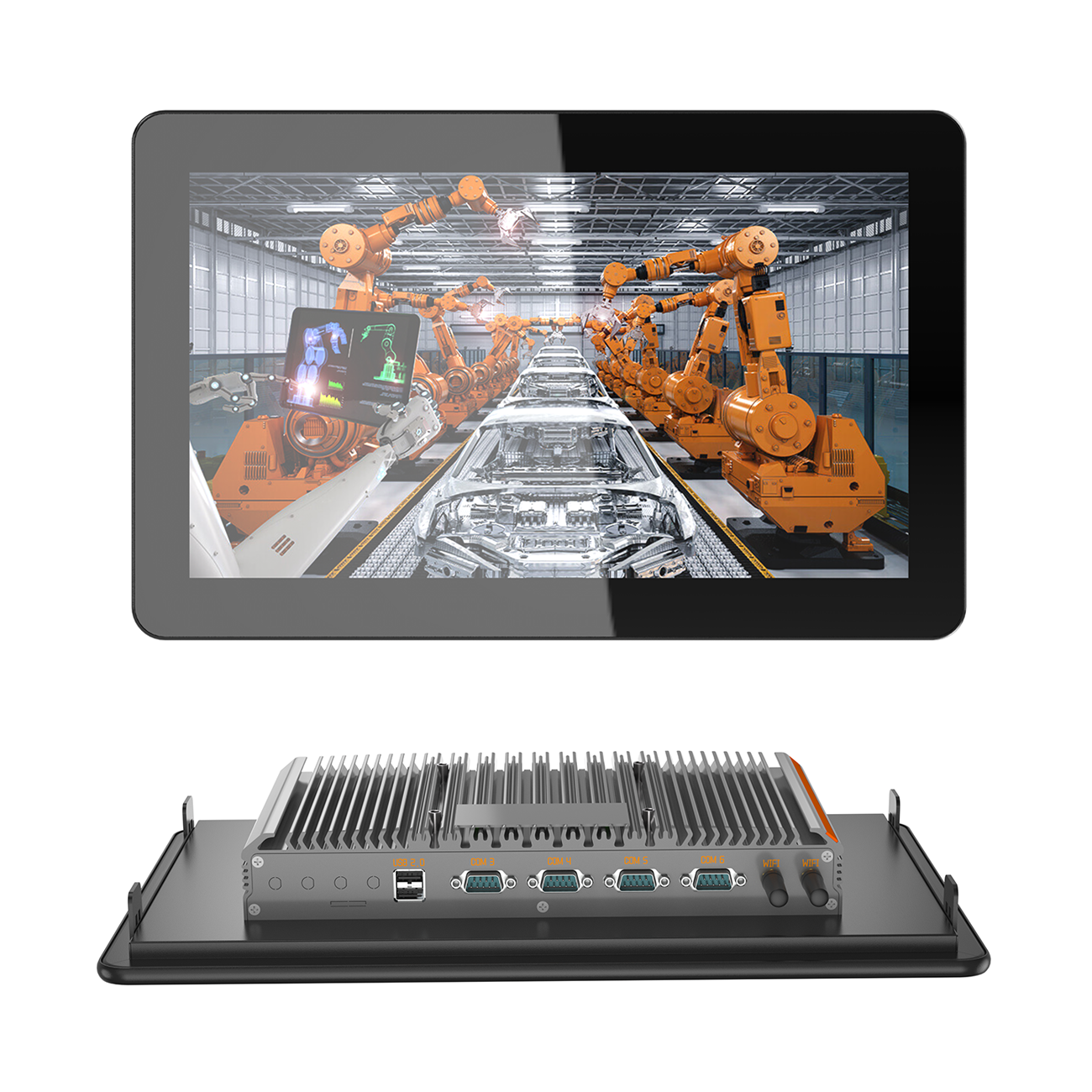
Senke's full industrial tablet lineup (7"–27") uses fanless passive cooling with heat pipes and aluminum alloy enclosures — delivering silent, fully-sealed, maintenance-free industrial reliability. All models feature IP65 front panels and wide-temperature operation (-10°C to 60°C). Custom thermal designs are available for special requirements.
Conclusion
Fan-cooled systems offer stronger performance and lower upfront cost for clean, accessible deployments. Fanless systems provide superior reliability, environmental sealing, and zero maintenance for harsh environments and mission-critical applications. Evaluate your performance needs, environment, reliability requirements, and budget to select the right cooling approach.
About Senke Senke is a trusted global provider of industrial display solutions, touch computers, and HMI systems with fanless industrial-grade cooling and a full 7"–27" product lineup.
Contact Email: sales@senke.com | Website: www.senke.com
New News
Embedded Industrial PC for Simple Integration
45
2026-10-16
High Protection Industrial Touch Panel PC
54
2026-10-15
Hot Products
Full Screen Digital Advertising Poster
Ultra-thin 4k
10 Inch Windows Rugged Tablet
Android 11,MT8788,4G,64G

Senke Electronic is a manufacture of industrial panel pc, industrial box pc, rugged tablet, kiosk payment and digital display advertising.